

Global issues
What is net zero?
The phrase ‘net zero’ gets bandied around by politicians of all stripes. But what has it got to do with climate change – and what is the UK’s net zero
 By
Jamie
By
Jamie
COP happens every year – so yet you might be wondering why emissions are still going up! On this page, we answer the question ‘what is COP?’ – from the basics, to some of the big achievements made over the years.
If you find this ‘What is the COP climate summit?’ explainer useful, please share it using the social media buttons above, or copy and paste this link: URL
Tell Labour they can win votes by prioritising climate action – Pledge to put climate first at the next election. Make the pledge and we’ll tell you when and how to cast the strongest tactical vote for climate in national and local elections.
COP is the term we usually use to refer to the United Nations (UN) Climate Change Conferences. COP stands for ‘Conference of the Parties’) and it refers to the governing body of any international treaty.
In this case, it refers to the UN Framework Convention on Climate Change (UNFCCC). The UNFCCC was agreed in 1992 at the ‘Earth Summit’ in Rio de Janeiro. It came into effect in 1994 – and the first COP was held the next year.
The COP conferences take place in a different location every year.
COP isn’t perfect:
It does have some benefits:
Some critics say that COP gives a false sense of security – that it’s all talk with very little action. While some pretty major developments have taken place at COP, they haven’t kept emissions to safe levels. There is a big gap between what countries have agreed to do and what they have actually done in practice.
The first conference – COP1 – took place in Berlin in 1995. It was headed by Angela Merkel – then the German environment minister, before she became the country’s chancellor a decade later.
1997: Kyoto, Japan
COP3 gave rise to the Kyoto Protocol, which was the first major global climate treaty. It required industrialised nations like Britain to cut their greenhouse gas emissions. Developed countries were exempt from cutting their emissions. The US later withdrew from the agreement.
2009: Copenhagen, Denmark
COP15 is widely seen as a failure. It was meant to lead to a new agreement to replace the Kyoto treaty. In the end, countries couldn’t agree on binding targets. The Copenhagen Accord was a vague non-binding statement, and delegates left frustrated.
2015: Paris, France
The Paris Agreement struck at COP21 is perhaps the most famous outcome of the COP process. In the agreement, countries agreed to keep global heating to 2C above pre-industrial levels. They also agreed on a more ambitious target of 1.5C.
Countries also agreed to set their own climate plans – nationally determined contributions (NDCs) – to be updated every five years. A global system for tracking progress was set up, but still there is penalty for missing targets.
2021: Glasgow, UK
COP26 was the first summit whose agreement referred directly to fossil fuels, with the agreement committing countries to phase down coal.
Another sticking point was climate finance – the transfer of money from industrialised countries largely responsible for climate change to nations who are less responsible but more vulnerable to its effects. Some money was agreed to help countries reduce their emissions and adapt to the effects of climate change. However, the agreement on money to help with climate impacts – known as ‘loss and damage’ – was not legally binding.
Other significant developments at COP
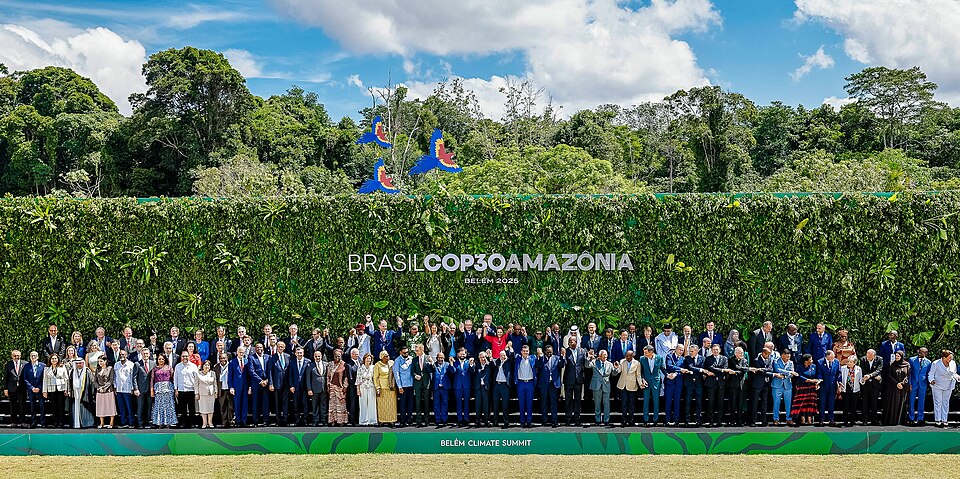
2025’s COP30 took place in Belém, Brazil. It was the first COP to take place after global average temperatures passed 1.5C for a full calendar year (in 2024). Taking place in the Amazon, Indigenous involvement became a flashpoint. Indigenous representatives felt that they had been excluded from talks, despite the Brazilian government describing COP30 as the “Indigenous COP”. Have a look at our guide to COP30 for more information.
COP31 will take place in Türkiye in 2026.
There are lots of things you can do – from switching to a plant-based diet to giving up flying. There are many good reasons to take individual steps to reduce our emissions. However, what we do as individuals is a drop in the ocean. What we really need is government action.
At VoteClimate, we want to show the Labour government that it can win votes in future elections by adopting better climate policies. You can use VoteClimate’s recommendation when deciding how to vote – if enough people make this pledge, we can show Labour that voters want climate action. And when you sign up, we’ll tell you when and how to cast the strongest tactical vote for climate in national and local elections.
Image credit: Ricardo Stuckert (CC BY-SA 4.0) via Wikimedia Commons
See the latest news & updates from VoteClimate.
The phrase ‘net zero’ gets bandied around by politicians of all stripes. But what has it got to do with climate change – and what is the UK’s net zero